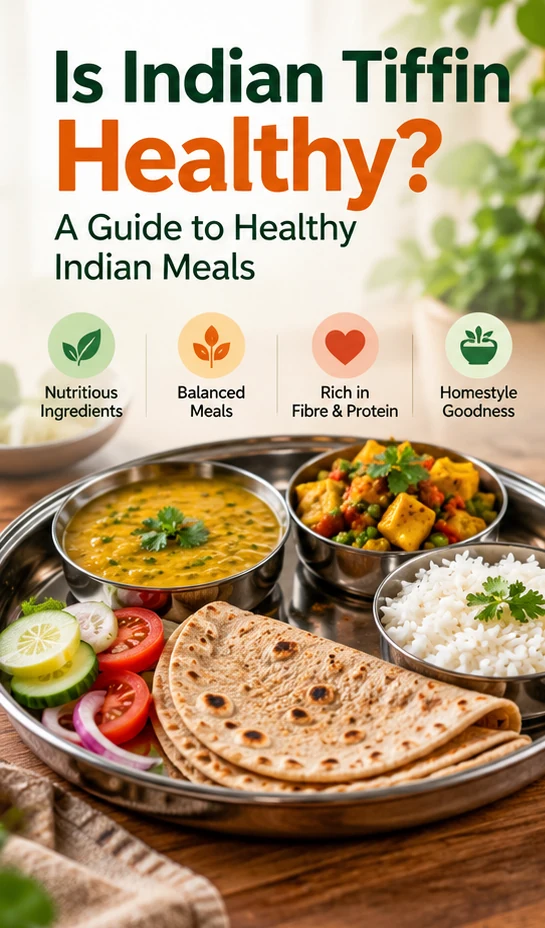

Is Indian food actually healthy enough to eat every day?
The answer depends greatly on the type of Indian food you choose.
Restaurant-style Indian food can sometimes contain large quantities of oil, cream, butter and sodium. Homestyle Indian food, however, can be very different.
A traditional Indian tiffin containing dal, vegetables, whole-wheat roti and other simple dishes can provide carbohydrates, protein, fibre, vitamins and minerals in one convenient meal.
What Makes an Indian Tiffin Healthy?
A good Indian tiffin is based on balance.
Instead of one oversized dish, Indian meals traditionally combine several different food groups.
A typical vegetarian tiffin may include:
- Dal, rajma, chana or another source of plant protein
- A vegetable sabzi
- Whole-wheat roti
- Rice or another carbohydrate
- Salad, yogurt or another accompaniment
The advantage is variety. Rather than getting most of your calories from one highly processed food, you're eating several different ingredients and food groups.
1. Dal and Legumes Are Excellent Plant-Based Foods
Dal has been a cornerstone of Indian meals for generations.
Lentils, chickpeas, kidney beans and other legumes contain a combination of plant protein and dietary fibre.
Popular Indian dishes include:
Dal tadka
Rajma
Chana masala
Moong dal
Masoor dal
Toor dal
Pairing lentils or beans with grains such as wheat or rice also provides a broader mix of amino acids across the meal.
For vegetarians especially, regularly including legumes is an easy way to make meals more nutritious and satisfying.
2. Indian Food Can Include a Huge Variety of Vegetables
One underrated advantage of traditional Indian cooking is the enormous range of vegetables it uses.
Think about dishes such as:
Bhindi masala
Aloo gobi
Baingan
Palak
Lauki
Methi
Mixed vegetables
Cabbage
Beans
Peas
Spices and Indian cooking techniques make vegetables much more interesting than simply eating steamed vegetables every day.
The key is how they are prepared.
A vegetable dish cooked with sensible quantities of oil can be very different nutritionally from one cooked with excessive butter, cream or oil.
3. Whole-Wheat Roti Can Be a Better Everyday Choice
Roti is another traditional part of an Indian homestyle meal.
Whole-wheat roti contains fibre and is generally far less processed than many refined breads and restaurant-style naan preparations.
Portion size still matters, of course.
Someone with lower energy requirements may prefer fewer rotis, while someone who is very active may need more.
This is one reason flexible tiffin sizes can be useful—different people do not necessarily need identical portions.
4. Healthy Indian Food Does Not Need to Be Boring
There is sometimes an assumption that eating healthier means giving up taste.
Indian cuisine proves otherwise.
Spices including turmeric, cumin, coriander, ginger, garlic, chilli, mustard seeds and garam masala can produce tremendous flavour without depending entirely on sugar, cream or excessive amounts of fat.
A homestyle rajma or dal can therefore taste satisfying while still being suitable for an everyday meal.
Restaurant Food vs Homestyle Indian Food
This distinction is important.
Restaurant food is generally designed to create an immediate flavour experience. Rich sauces, cream, butter and additional oil can all contribute to that experience.
Food eaten every day has a different job.
It should taste good, but it also needs to fit comfortably into your routine.
That is why many people searching for healthy Indian food in Toronto are increasingly choosing homestyle tiffin meals rather than ordering restaurant food every day.
Portion Control Still Matters
Even nutritious food can provide more energy than you need if portions are consistently too large.
A balanced approach is therefore more important than simply labelling foods "healthy" or "unhealthy."
Look at:
- How much food you actually need
- Your activity level
- Protein in the meal
- Quantity of vegetables
- Number of rotis
- Amount of rice
- Cooking oil
- Snacks and drinks eaten alongside the meal
For some people, a smaller tiffin may be sufficient. Others may require a regular meal.
Can You Eat Indian Tiffin Regularly?
Absolutely—provided the menu has good variety.
One of the strengths of Indian cuisine is that meals can change constantly.
Monday might include paneer and dal.
Tuesday could contain bhindi and chana.
Wednesday could include soya, vegetables and another type of dal.
The rotation of pulses, vegetables, grains and proteins helps prevent your daily meal from becoming monotonous.
Healthy Indian Food for Busy People
The biggest nutritional problem for many people is not knowing what healthy food looks like.
It is finding the time to make it.
Students, professionals and families frequently end up eating fast food or ordering restaurant meals simply because cooking, grocery shopping and cleaning take time.
A healthy Indian tiffin service can remove much of that friction.
Your meal is already prepared. You simply heat it and eat.
That convenience can make it easier to maintain a consistent eating routine during a busy week.
Our Approach at Pure Veg Tiffin
At PureVegTiffin.com, our focus is simple: fresh, homestyle, 100% vegetarian Indian meals designed for everyday eating.
Our meals are freshly cooked, and our rotating menus include traditional Indian vegetables, dals and other vegetarian favourites.
We also offer multiple portion sizes because everyone has different appetites and nutritional needs.
Our goal isn't to turn Indian food into something unrecognizable in the name of health.
It is to keep Indian food what it has always been at its best:
Simple. Fresh. Varied. Comforting. And made like a proper home meal.
If you're looking for healthy vegetarian Indian meals without having to cook every day, explore our weekly menu and choose the tiffin size that works for you.
Eat Indian. Eat homestyle. Eat well.